Payload, Not Towing Capacity, Is What Limits Your Truck
Door-Sticker Math With Worked Examples

Payload subtraction
- Read yellow door label Occupants and cargo max Brochure is lightest trim
- Subtract people and pets Real weights, every seat
- Subtract bed and cab cargo Generator, cooler, firewood
- Subtract added accessories Tonneau, cap, bumper, toolbox Dealer add-ons not counted
- Subtract hitch head and bars 70-100 lb for WDH
- Remainder is max tongue weight Full measured tongue weight Using the distributed figure
- Divide by 0.13 Max loaded trailer lb Rear GAWR, tires next
Tongue weight & payload calculator
Plug in your scale numbers and the door sticker; get the 10–15% window and the payload you have left.
Open the calculator →Watch it done
Videos are from the channels named, not Chock & Level. Where a video and your manual disagree, follow the manual. Playing a video loads YouTube, which sets its own cookies.
The window sticker said the truck can tow 11,000 lb. The trailer has a GVWR of 7,600 lb. Both salesmen said you’re fine. Then you put four people, a dog, a cooler, a generator, and a weight distribution hitch in and on the truck, hook up a trailer with 950 lb on the tongue, and the truck is over its gross vehicle weight rating before it leaves the driveway.
Towing capacity describes how much the drivetrain and chassis can pull. Payload describes how much weight the truck itself can carry, and tongue weight is carried, not pulled. On half-ton trucks and midsize SUVs, payload is almost always the number that runs out first. It’s printed on a yellow label in the driver’s door jamb, and the math is subtraction.
You need the door labels, your trailer’s measured tongue weight (see how to measure tongue weight), and a calculator. Twenty minutes, plus a CAT scale trip to confirm.
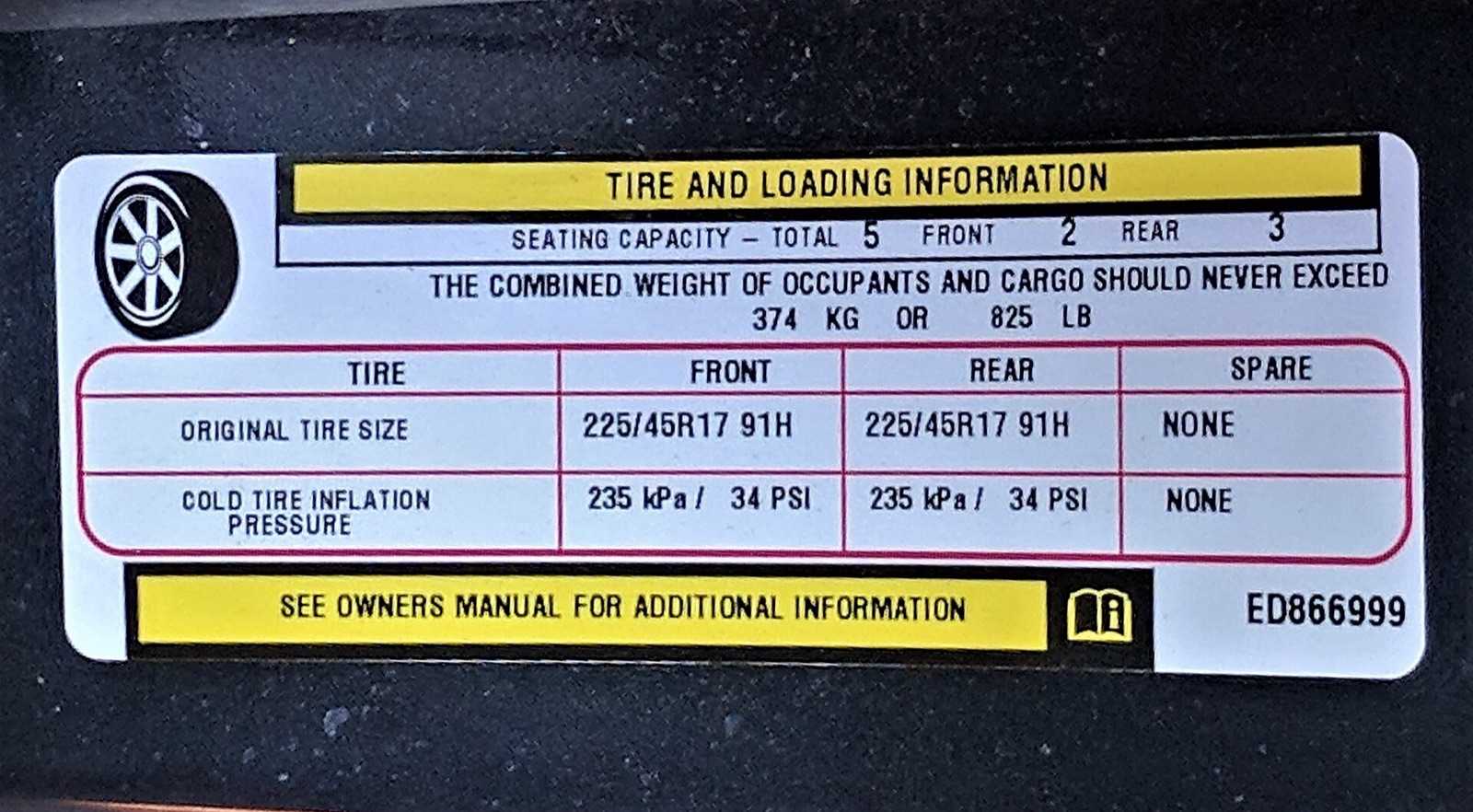
Quick answer. Read the yellow door label: "The combined weight of occupants and cargo should never exceed XXXX lb." That is your payload. Subtract everyone who rides in the truck, everything in the cab and bed, any accessories added after the factory (tonneau, cap, bumper, toolbox), and the hitch head and bars (typically 70 to 100 lb). What's left is the most tongue weight you can carry. Divide it by 0.13 for a realistic maximum loaded trailer weight, which on most half-tons is well under the advertised tow rating.
The five numbers and where they live
GVWR (Gross Vehicle Weight Rating). The most the truck can weigh with everything in and on it, including the tongue weight of the trailer. On the white Safety Certification Label on the driver’s door jamb.
Curb weight. The truck as built, full fuel, no people, no cargo. Not printed on the truck; the manufacturer calculates it per VIN.
Payload. GVWR minus curb weight. Printed on the yellow Tire and Loading Information label as “The combined weight of occupants and cargo should never exceed XXXX kg or XXXX lb.” That label is specific to your truck as it left the factory, with its options: a sunroof, a heavier axle, running boards, or a crew cab all lower it. The brochure’s “up to 2,300 lb payload” belongs to the lightest configuration, usually a regular cab work truck. The label is required by FMVSS 110 and does not account for anything a dealer or owner added afterward.
GAWR (Gross Axle Weight Rating), front and rear. The most each axle, with its springs, bearings, wheels, and tires, is rated to carry. Same white label. The rear GAWR is the second wall you hit when towing, because the hitch sits behind the rear axle and puts more than its own weight on it.
GCWR (Gross Combined Weight Rating). The most truck plus trailer can weigh together. In the owner’s manual towing tables, not on the door. Towing capacity is GCWR minus the truck’s weight; under SAE J2807, the standard behind current tow ratings, that truck weight includes a 150 lb driver and a 150 lb passenger and nothing else. Every pound of people and gear beyond 300 lb comes straight off the tow rating too.
The one that matters for a travel trailer is payload, with rear GAWR right behind it.
What counts against payload
Everything that wasn’t on the truck when it rolled off the line and isn’t riding on the trailer’s axles:
- People. Every seat that will be occupied, at real weights.
- Pets, coolers, firewood, generator, bikes, tools, the camp chairs that didn’t fit in the trailer, groceries picked up on the way.
- Fuel beyond a full tank doesn’t count (curb weight assumes full), but an auxiliary or transfer tank does, at about 6.1 lb per gallon of diesel or 6.3 lb per gallon of gasoline.
- Accessories added after the factory. Typical weights from manufacturer spec sheets: soft tonneau 30 to 50 lb, hard folding tonneau 60 to 100 lb, fiberglass cap 150 to 250 lb, steel aftermarket bumper 150 to 300 lb, crossbed toolbox 50 to 100 lb empty, drop-in bed liner 40 to 60 lb, running boards 30 to 60 lb, larger wheels and tires 10 to 30 lb more per corner.
- The hitch. A weight distribution head, shank, and two spring bars weigh 70 to 100 lb depending on bar rating; a plain Class IV ball mount and ball about 20 lb. It sits behind the rear axle, where every pound counts extra against the rear GAWR.
- The full tongue weight of the loaded trailer. Not the brochure dry hitch weight. Not a reduced “after distribution” figure. The measured number.
That last line is the one people skip. A WDH moves some of the load the ball carries to the truck’s front axle and to the trailer axles, so the drive axle reads lighter on a scale with the bars on. Tow vehicle manufacturers still instruct you to count the full tongue weight against payload and GVWR, and that is the number to plan to. The bars don’t change what the trailer weighs or where its mass sits; they change which tires carry it.
Why an 11,000 lb tow rating meets a 7,000 lb trailer
Take a crew-cab half-ton with a 1,650 lb payload label, which is in the normal range for a well-optioned 4x4 crew cab. A travel trailer loaded to 7,000 lb at 13 percent tongue weight puts 910 lb on the ball. Add a 90 lb hitch. That is 1,000 lb of payload gone with nobody in the truck. Two adults at 350 lb total, a 60 lb dog, and 200 lb of bed cargo brings it to 1,610 lb: 40 lb under. Add two kids and you’re 110 lb over. Add a hard tonneau and you’re 190 lb over.
The 11,000 lb tow rating assumed 300 lb of people and a bare truck. Nobody tows that way.
The 7,000 to 7,500 lb figure that shows up in forum advice for half-tons isn’t a rule; it’s what falls out of this arithmetic for a typical family with a typical payload label. Your label might say 1,350 or 2,050, and that moves the answer by thousands of pounds of trailer.
Three worked examples
These are example vehicles, not specific trucks. The payload figures are typical for each class; your door jamb is the only number that counts.
Example A: crew-cab half-ton, 1,650 lb payload
| Item | lb |
|---|---|
| Two adults | 350 |
| Two kids | 150 |
| Dog | 60 |
| Bed cargo (generator, cooler, firewood, chairs) | 200 |
| Hard folding tonneau | 80 |
| WDH head, shank, bars | 90 |
| Subtotal before tongue weight | 930 |
| Payload remaining for tongue weight | 720 |
720 lb of tongue weight at 13 percent is a 5,540 lb loaded trailer. At the 10 percent minimum, which you don’t want to plan to, 7,200 lb. So this truck, loaded this way, is a 5,500 to 6,500 lb loaded-trailer truck regardless of the 11,000 lb on the window sticker. Same truck with just the two adults and no tonneau: 1,650 − 350 − 200 − 90 = 1,010 lb for tongue, which supports a 7,700 lb trailer at 13 percent. The people are the difference.
Example B: three-quarter-ton, 3,100 lb payload
Same family, same gear, same tonneau, same hitch: 930 lb. Remaining: 2,170 lb. At 13 percent that is a 16,700 lb trailer on paper, which is more than the truck’s GCWR or receiver would allow and more than any travel trailer weighs. On this truck payload is not the limit; GCWR, the receiver rating, and the rear GAWR take over. That is why the step from a half-ton to a three-quarter-ton changes the conversation so completely: it roughly doubles payload while adding a comparatively small amount of tow rating.
Example C: midsize SUV, 1,300 lb payload, 5,000 lb tow rating
| Item | lb |
|---|---|
| Two adults | 350 |
| Two kids | 150 |
| Cargo area (cooler, bags, dog) | 150 |
| WDH head and bars (only if the manual permits a WDH; many unibody SUVs do not) | 80 |
| Subtotal | 730 |
| Remaining for tongue weight | 570 |
570 lb at 13 percent is a 4,400 lb loaded trailer. A trailer loaded right to the 5,000 lb tow rating at 13 percent needs 650 lb of tongue, which puts this SUV 80 lb over payload with nothing on the roof. Many SUV manuals also cap tongue weight separately (often 500 lb) and prohibit weight distribution on unibody platforms; read the towing section before buying bars.
The 80 percent rule of thumb
You’ll hear “never tow more than 80 percent of your rating.” It’s a rule of thumb, not an engineering number, and it exists because the rating is a maximum under test conditions with a nearly empty truck. Applying 80 percent to the tow rating is a reasonable sanity check for the drivetrain and for how the combination will feel on a 6 percent grade in a headwind. It does not replace the payload math. A truck can be at 60 percent of its tow rating and over payload at the same time; Example A is exactly that.
The rear axle: the second limit
Tongue weight does not land on the rear axle one for one. The ball hangs 4 to 5 ft behind the rear axle, so the tongue acts as a lever that adds to the rear axle and lifts the front.
With tongue weight P, hitch overhang a behind the rear axle, and wheelbase W: the rear axle gains P × (1 + a ÷ W) and the front axle loses P × a ÷ W. For 900 lb of tongue, a 55 in overhang, and a 145 in wheelbase, the rear axle gains 900 × 1.38 = 1,240 lb and the front loses 340 lb, before a WDH. That is why the truck squats and the steering goes light, and why rear GAWR can be exceeded while GVWR still has room.
The WDH is what fixes this part. Tensioning the bars pushes weight back onto the front axle and onto the trailer axles. Your truck’s manual tells you how much front axle weight to restore, and you check it at a CAT scale.
Tires: the third limit
The rear GAWR already assumes the tires the truck came with. If you’ve changed tires, check the load index on the sidewall. A tire shows a size followed by a load index and speed rating, for example 275/65R18 116T. Load index translates to a per-tire maximum at the sidewall pressure:
| Load index | lb per tire | Load index | lb per tire |
|---|---|---|---|
| 110 | 2,337 | 118 | 2,910 |
| 112 | 2,469 | 120 | 3,086 |
| 114 | 2,601 | 121 | 3,197 |
| 116 | 2,756 | 123 | 3,417 |
Two tires at index 116 carry 5,512 lb at max pressure. Trucks fitted with P-metric (passenger) tires derate them by dividing by 1.10 for light-truck service, which the manufacturer already built into the GAWR. If you swap to a tire with a lower load index than the original, your real axle capacity dropped even though the door sticker didn’t change. Run the pressures on the door label for OEM tires, and check them cold.
What does not increase payload
- A weight distribution hitch. It moves load between axles. GVWR is the sum, and the sum doesn’t change.
- Air bags, helper springs, or a heavier leaf pack. They level the truck and reduce squat. They do not change GVWR, GAWR, or the tire rating, and the certification label is what an inspector or an insurer reads.
- Bigger tires. A higher load index raises what the tires can carry, but GAWR also covers springs, bearings, brakes, and the frame, and the label still governs.
- Removing the tailgate or the rear seat. Technically yes, by the few dozen pounds they weigh.
Verify at a CAT scale
Load the truck as you travel, everyone aboard, hitch up with the bars tensioned, and pull onto a CAT scale with the steer axle on the first platform, drive axle on the second, trailer axles on the third. Then compare:
- Steer axle weight against front GAWR.
- Drive axle weight against rear GAWR.
- Steer plus drive (truck gross) against GVWR.
- Truck gross plus trailer axles against GCWR.
- Trailer axles against the trailer’s GAWR, and trailer axles plus tongue weight against the trailer’s GVWR.
For the tongue weight itself you need a bars-off weigh and a truck-alone weigh; the three-weigh procedure is in the tongue weight guide. A reweigh is a few dollars within 24 hours, so you can adjust bar tension or move cargo and check again.
Symptom → likely cause
| What you see | Most likely | Check |
|---|---|---|
| Truck rear squats 2 in or more hitched, bars on | Over rear GAWR, or bars under-tensioned | Drive axle on CAT scale; bar tension |
| Steering feels light, wanders, headlights aim high | Front axle unloaded | Steer axle hitched vs. unhitched; WDH setup |
| Door label payload hundreds of pounds below the brochure | Options and cab/box configuration | Normal; use the label |
| Within tow rating but handling is poor | Over payload or rear GAWR | Full CAT weigh with people aboard |
| Rear tires running hot, wearing shoulders | Over tire load rating or under-inflated | Load index; cold pressure |
| Sits level but stopping distances feel long | Over GCWR or trailer brakes mis-adjusted | Combined weight; brake controller gain |
Stop and don't tow until it's fixed if: the scale puts you over GVWR, either GAWR, or GCWR; the replacement tires carry a lower load index than the originals and the hitched rear axle weight exceeds what two of them are rated for; the receiver's sticker rating is below your measured tongue weight; or the owner's manual prohibits a weight distribution hitch on your vehicle and you're running one. Overloading isn't a performance problem you can drive around. It's brakes, bearings, tires, and the frame, and the failures happen at the bottom of a long grade.
Parts and tools mentioned
- Yellow Tire and Loading Information label and white Safety Certification Label, driver’s door jamb
- Owner’s manual towing section (GCWR table, WDH policy, front axle restoration target)
- CAT scale and the Weigh My Truck app
- Weight distribution hitch (head, shank, bars), weighed on a bathroom scale before installation
- Tire pressure gauge; tire sidewall load index
- Tongue weight calculator
Questions people ask next
Where is the payload number if the yellow label is missing or unreadable? The manufacturer can supply it by VIN, and some owner portals list it. Failing that, a CAT scale weigh of the truck alone with full fuel gives you curb weight; subtract it from the GVWR on the white label.
Does the whole trailer count against the truck’s payload? Only the tongue weight. The rest rides on the trailer’s axles. The whole trailer counts against GCWR.
I’m 100 lb over payload. Does that matter? The ratings are limits, not targets with a margin printed next to them. Whether 100 lb is tolerable isn’t something anyone outside the manufacturer can certify, and the practical fix (move 100 lb from the truck to the trailer, behind the trailer axle, or leave it home) is usually easy. Being over also puts you in a bad spot after an accident regardless of fault.
Why does the brochure show a higher payload than my label? The brochure number is the maximum for the model line, usually a regular cab, two-wheel drive, base trim. Every option adds curb weight and subtracts payload one for one.
Does a diesel engine help? It helps tow rating and GCWR and hurts payload: a diesel option adds several hundred pounds of curb weight and lowers the payload label by the same amount.
Manuals and references consulted
- FMVSS 110 (49 CFR 571.110) Tire and Loading Information label requirements
- SAE J2807 Performance Requirements for Determining Tow-Vehicle GCWR and Trailer Weight Rating
- Tire and Rim Association load index tables
- Tow vehicle owner's manuals, towing and loading sections (procedures are similar across makes)
- Equal-i-zer and Reese weight distribution hitch manuals (component weights and bar selection)