RV Furnace Runs but the Battery Dies by Morning
Blower Draw Math and the Fixes That Work

Where the overnight amp-hours go
- Battery full at bedtime 12.6 V rested Short charge, old battery
- Thermostat calls heat Set point vs outside Set too high
- Blower runs 7-11 A Dirty wheel, more draw
- Heat reaches the cabin Duct leaks, no skirting
- Other loads stack on 0.5-5 A Tank heaters, detectors
- Voltage sags overnight Board drops ~10.5 V Furnace quits at 3 a.m.
Not sure where to start?
Answer one check at a time, in the order the system works. The first "no" is where the fault is, and you jump straight to the step that fixes it.
Battery runtime calculator
Tick the loads you run, set the bank and the temperature, get days of runtime and the solar to break even.
Open the calculator →Watch it done
Videos are from the channels named, not Chock & Level. Where a video and your manual disagree, follow the manual. Playing a video loads YouTube, which sets its own cookies.
The furnace ran fine when you went to bed. Sometime before dawn the blower slowed, the furnace locked out, and you woke up to a cold trailer and a battery at 11.5 V. Nothing is broken. The furnace simply used more amp-hours than the battery had.
That’s the usual story, and it’s a math problem before it’s a repair. In order of how often each is the real cause: the battery is too small or too old, it wasn’t fully charged at bedtime, other loads are stacked on top of the furnace, the set point is high for the outside temperature, heat is leaking out through the underbelly or ducts, and last, the furnace itself is drawing more than it should.
You need a multimeter, ideally a DC clamp meter, and an evening to watch it. Ten minutes of arithmetic tells you whether the battery could ever have made it.
Quick answer. Multiply your blower's amp draw (7 to 11 A on most units) by the hours it actually runs. A cold night at 40 percent duty over 8 hours is about 25 to 35 Ah from the blower alone. A single Group 24 lead-acid battery has roughly 35 to 40 Ah you can use without damaging it, less in the cold. Charge fully before bed, drop the set point to 60 to 62°F, kill tank heaters and other loads, and if it still won't make it, add capacity: a second battery, a 6 V pair, or lithium. Use the battery runtime calculator with your own numbers.
How the furnace spends your battery
A propane RV furnace burns propane for heat but runs everything else on 12 V: the control board, the gas valve solenoid, and the blower motor, which is nearly all the draw. The blower runs for the whole burn plus a purge before ignition and a cool-down after the flame goes out, so the electrical on-time is a bit longer than the burn time.
Draw varies by model and generation. Most 30,000 to 35,000 BTU/h units (Suburban SF-30 and NT-30, Atwood/Dometic 8535-IV) fall in the 7 to 11 A range commonly cited for RV furnaces, smaller 16,000 to 20,000 BTU/h units draw less, and 35,000 to 42,000 BTU/h units can run higher.
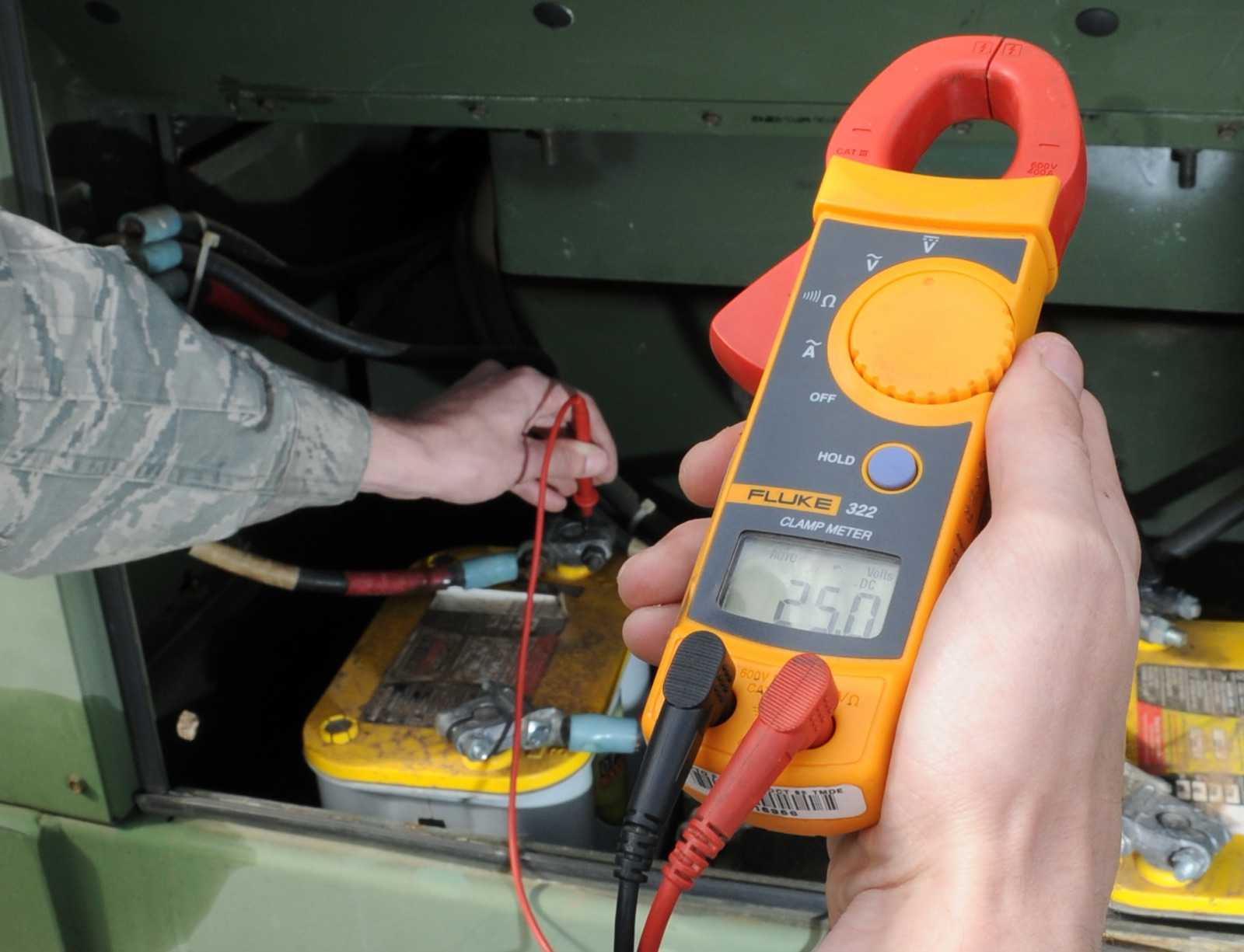
Check your model’s data plate or manual; it lists the rated amps. Then measure: put a DC clamp meter around the furnace positive lead with the blower running. A reading noticeably above the rated draw points at the blower motor or wheel (step 6).
The duty-cycle math
Duty cycle is the fraction of the hour the furnace is actually running. It depends on the outside temperature, the set point, the trailer’s insulation, and wind. There’s no universal number; a typical travel trailer might run 20 percent on a 40°F night and 50 to 60 percent or more in the low 20s with wind. The fastest way to find yours is to time it: note how many minutes per hour the blower runs on a typical evening.
Amp-hours used over an 8-hour night:
| Duty cycle | Run time in 8 h | At 7 A | At 9 A | At 11 A |
|---|---|---|---|---|
| 20% | 1.6 h | 11 Ah | 14 Ah | 18 Ah |
| 40% | 3.2 h | 22 Ah | 29 Ah | 35 Ah |
| 60% | 4.8 h | 34 Ah | 43 Ah | 53 Ah |
That’s the blower only. Add everything else that runs overnight.
What a single Group 24 can actually deliver
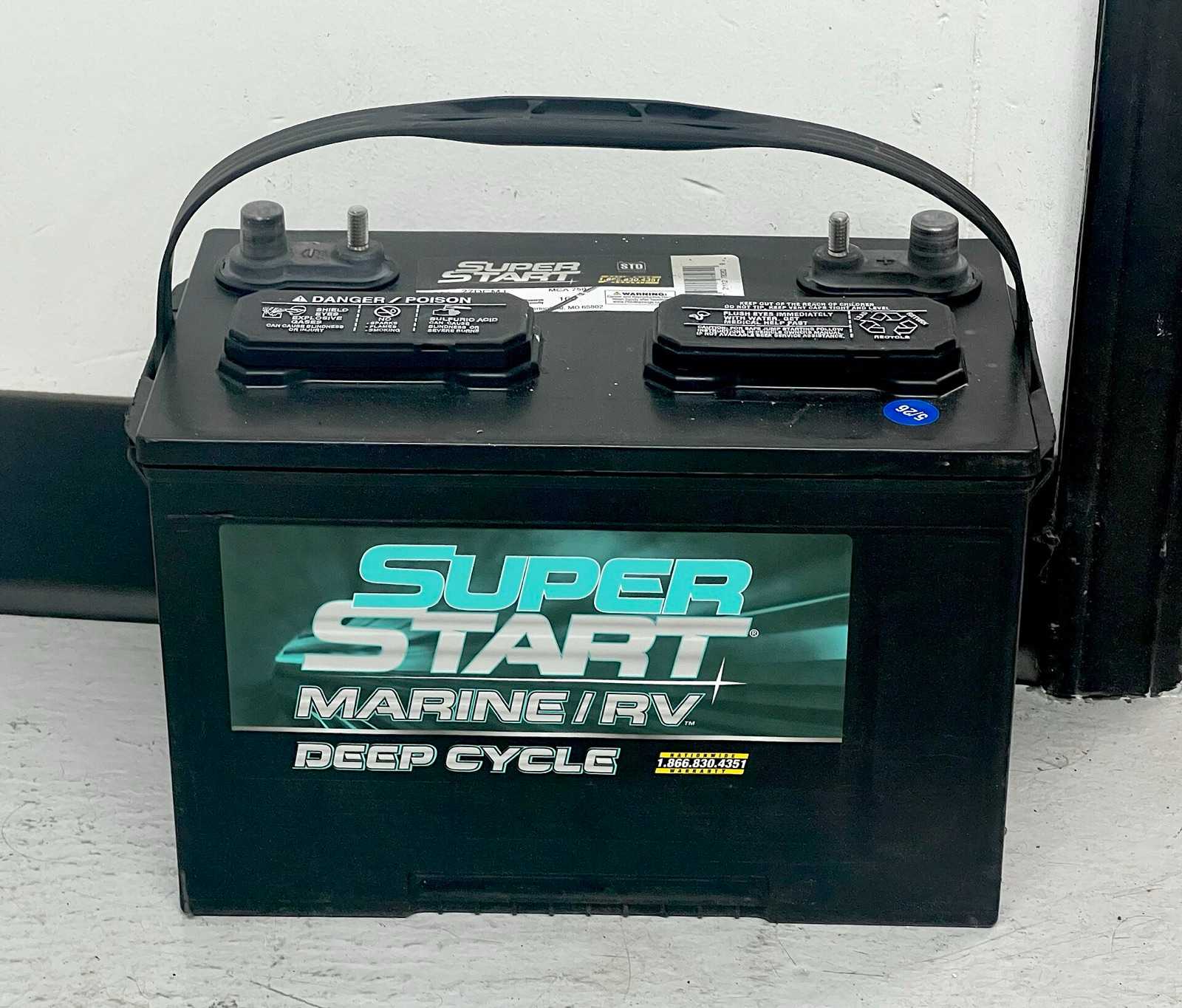
A typical Group 24 deep-cycle flooded battery is rated about 70 to 85 Ah at the 20-hour rate. The commonly recommended limit for lead-acid is 50 percent depth of discharge, so call it 35 to 40 Ah usable.
Then the cold. Lead-acid capacity drops with temperature; manufacturer derating tables show roughly 75 to 80 percent of rated capacity at 32°F and lower below that. A battery on the tongue at 25°F might give 28 to 32 Ah before it reaches 50 percent.
There’s one more limit. The furnace board drops out somewhere around 10.5 V, and the blower slows well before that (see the furnace-won’t-ignite guide for why that stops ignition). A lead-acid battery sagging under a 9 A load hits that threshold before it’s truly empty, especially an old one. So a “100 Ah” battery can easily give you less than 30 Ah of furnace time on a cold night.
Compare: a 40 percent night with a 9 A blower needs 29 Ah plus a few Ah of other loads. A healthy, full Group 24 just about makes it. A two-year-old one that went to bed at 80 percent does not.
Step 1Test the battery’s real capacity
Batteries lose capacity with age and abuse. A flooded Group 24 that sat discharged over one winter may have lost a third of its capacity and still read normal voltage when charged.
Rest the battery off charge for four hours and read the posts, then run the furnace blower and watch how far the voltage sags. A battery that rests at 12.6 V and drops below about 11.5 V under the blower is worn out. The full procedure, including a hydrometer check and a real capacity test, is in the deep-cycle battery testing guide.
Step 2Make sure it was full at bedtime
The second most common cause is a battery that never got charged. Some typical ways that happens:
- A short drive. The 7-pin charge line delivers a few amps through 25 to 35 ft of thin wire. A two-hour drive might put back 5 to 15 Ah, not 50. See the 7-pin charging guide for the math.
- Shore power for a few hours. A WFCO converter often sits at 13.6 V rather than 14.4 V bulk, and lead-acid needs hours of absorption to get the last 20 percent in. An afternoon plugged in won’t fill a half-empty battery.
- A cloudy day on solar. A 100 to 200 W panel in winter produces far less than its rating; low sun angle and short days cut it hard.
Check it: rest the battery and read voltage in the evening before the furnace starts. Below 12.5 V (flooded) means you’re starting the night already short.
Step 3Find the loads stacked on the furnace
Measure total draw with the furnace off and everything you normally leave on overnight left on. Put the clamp meter around the battery positive, or read the shunt monitor if you have one.
Typical overnight loads:
- LP/CO detector: about 0.05 to 0.1 A
- Stereo memory, TV antenna booster left on, USB chargers: 0.1 to 1 A combined
- Absorption fridge control board on propane: about 0.4 to 1 A on many units
- Tank heater pads: commonly 3 to 5 A each, thermostatically controlled. Three tanks with heaters on can rival the furnace.
- CPAP through an inverter: 3 to 6 A at 12 V for many machines without the humidifier, much more with it
- Inverter left on with no load: 0.5 to 2 A idle draw depending on size
A 1 A background load is 8 Ah overnight. That alone can be the difference between making it and not.
Step 4Set point and nighttime setback
The duty cycle is set by the gap between inside and outside temperature. Dropping from 70°F to 62°F on a 30°F night cuts that gap from 40°F to 32°F, a 20 percent drop in heat loss, which drops furnace run time roughly in proportion. Good sleeping bags or a heated mattress pad on shore power let you go lower still.
Some digital thermostats support a programmed setback. Use it, and set the wake-up warm-up for 30 minutes before you get up rather than all night.
Step 5Stop heating the outside
A travel trailer’s underbelly is where most heat escapes, and it’s also where the ducts run.
Duct leaks. Flexible or rigid ducts run under the floor to each register. A duct that has popped off a register boot heats the underbelly instead of the cabin. Hold your hand over each register with the furnace running; one with weak airflow compared to the others has a leak or a crushed run. Fixing it may mean dropping a section of underbelly material.
Skirting. Fabric or vinyl skirting around the trailer’s base stops wind from stripping heat off the floor. It’s the most effective cold-weather upgrade people describe for stationary winter camping.
Windows and vents. Reflective insulation in windows, a vent cushion in roof vents, and closing off the bathroom fan opening help. Leave some ventilation; condensation becomes a problem fast in a sealed trailer.
Step 6The furnace’s own health
A blower wheel caked with lint and pet hair moves less air, runs longer to deliver the same heat, and on some motors draws more current. A worn motor bearing increases draw too.
Turn off power and propane, pull the access panel, and inspect the wheel. Clean it with a soft brush and compressed air. While you’re there, check the return air path isn’t blocked. If the clamp meter reads well above the data-plate amps after cleaning, the motor is on its way out.
The fixes, ranked by cost
- Free: lower the set point and sleep warmer. A 62°F set point plus a good sleeping bag cuts furnace amp-hours by a meaningful fraction, as the duty-cycle math shows.
- Free: kill the extra loads. Tank heaters off unless it’s below freezing, inverter off, antenna booster off.
- Cheap: charge fully before bed. Run the generator in the evening, or press the Progressive Dynamics Charge Wizard button to force boost mode.
- Cheap: clean the blower and fix duct leaks.
- Moderate: a second 12 V battery or two 6 V golf-cart batteries. Two Trojan T-105 batteries in series are rated 225 Ah at the 20-hour rate, about 110 Ah usable at 50 percent, roughly triple a Group 24. Check tongue weight.
- Moderate: skirting for stationary camping.
- Higher: lithium. A 100 Ah LiFePO4 gives 80 to 100 Ah usable, holds voltage so the furnace board doesn’t drop out early, and weighs less. Cold-charging limits apply; see the lead-acid vs lithium guide.
- Higher: solar for daytime recovery. Panels don’t help overnight, but they refill the battery the next day so you start each night full. Winter output is highly location-dependent.
- Alternative heat: catalytic, blue flame, or indoor-rated radiant propane heaters (Camco Olympian Wave series catalytic, Mr. Heater Buddy series radiant). These burn propane with no 12 V draw at all. They also consume oxygen from the cabin and add moisture, roughly 1.5 lb of water per pound of propane. Follow the manufacturer’s ventilation requirements exactly, typically a roof vent and a window cracked, keep a working CO alarm, and read the manual on overnight use; many manufacturers advise against running them while sleeping.
- Shore power: an electric heater. A 1,500 W space heater draws about 12.5 A at 120 V, under half a 30 A service. Use one with tip-over and overheat shutoff, plug directly into an outlet (no extension cord), and the furnace becomes a backup.
Symptom → likely cause
| What you see | Most likely | Check |
|---|---|---|
| Furnace dies around 3 to 5 a.m. on cold nights only | Not enough battery for that duty cycle | Ah math vs usable capacity |
| Dies every night, even mild ones | Worn battery or not charged | Rest voltage before bed; load test |
| Battery low even with furnace off | Parasitic or overnight loads | Clamp meter on battery positive |
| Furnace runs much more than it used to | Duct leak, set point, wind | Register airflow; skirting |
| Clamp meter reads well above data plate | Dirty blower wheel or worn motor | Clean wheel; recheck draw |
| Furnace stops but battery reads 12.0 V in the morning | Voltage sag under load, board dropped out | Battery health; wiring voltage drop to furnace |
Stop and get help if: you smell propane; your CO alarm sounds (get everyone outside first, then figure out why); you see soot around the furnace exhaust or a catalytic heater; anyone gets a headache, dizziness, or nausea while a heater is running. Never use a stove, oven, or a heater not rated for indoor use to heat the trailer. Keep the CO and LP alarms powered, which means not letting the battery run flat. If you add a catalytic heater, follow its ventilation rules every time.
Parts and tools mentioned
- DC clamp meter or a shunt monitor (Victron SmartShunt)
- Multimeter
- Two Trojan T-105 6 V batteries, or a second 12 V battery of the same type and age
- 100 Ah LiFePO4 battery with low-temperature protection
- Trailer skirting, window insulation, vent cushions
- Camco Olympian Wave catalytic heater or Mr. Heater Buddy indoor-rated radiant heater, with a CO alarm
- 120 V space heater with tip-over and overheat protection
Questions people ask next
Why does the furnace stop even though the battery isn’t dead? The board and blower need voltage, not just capacity. Under a 9 A load, a tired battery sags below the board’s cutoff while it still has amp-hours left. A healthier or bigger battery sags less.
Is it OK to run the furnace all night on battery? Yes, if the battery has the capacity. Plan for the coldest night, not the average one, and keep about 50 percent in reserve on lead-acid.
Will a generator for an hour in the morning recover the battery? Partly. A typical converter puts back 20 to 40 Ah in an hour only while the battery is accepting bulk current. Getting lead-acid from 80 to 100 percent takes several hours.
How many amps does my furnace really draw? Check the data plate, then measure with a clamp meter while it runs. The furnace-won’t-ignite guide covers the voltage side of the same reading.
Photos

Manuals and references consulted
- Suburban Manufacturing, NT-Series and SF-Series Furnace Installation and Service Manuals (rated 12 V amp draw by model)
- Atwood/Dometic Hydro Flame 8500-IV Series Service Manual (rated amp draw)
- Trojan Battery Company deep-cycle battery specifications (T-105 capacity, temperature derating)
- Camco Olympian Wave catalytic heater owner's manual (ventilation requirements)
- Mr. Heater Buddy series operating instructions (oxygen depletion sensor, ventilation)
- NFPA 1192 Standard on Recreational Vehicles (CO alarm requirements)