Why Is My RV Beeping? Every Alarm, What It Means, and How to Silence It Correctly

Finding the beep
- Count beeps, time gaps 4 CO, 3 smoke
- Find the flashing LED Floor LP, ceiling smoke/CO
- Read battery voltage Below 10.5 V chirps Charge; find the drain
- Check detector date LP 5-7 yr, CO 7-10 End of life, replace
- Rule out contaminants Aerosols, cleaners, sewer gas Propane on, assume leak
- Check inverter, TPMS, panels Fault code in manual
- Pull fuses one by one Own battery, ceiling alarm
Not sure where to start?
Answer one check at a time, in the order the system works. The first "no" is where the fault is, and you jump straight to the step that fixes it.
Watch it done
Videos are from the channels named, not Chock & Level. Where a video and your manual disagree, follow the manual. Playing a video loads YouTube, which sets its own cookies.
It’s 2 a.m., something in the trailer is chirping once every 30 seconds, and every device in the rig looks identical in the dark. The candidates, in order of how often they turn out to be the source: the propane detector complaining about low battery voltage, a smoke or CO alarm with a dying 9 V battery or at end of life, and an inverter warning that the battery is low. Everything else is further down the list.
Two things sort it out fast: the beep pattern (how many beeps, how long between them) and whether the chirp stops when you plug into shore power or start the truck. If it does, you have a battery voltage problem, and the detector is simply the first thing in the rig to notice.
You need a flashlight, a multimeter, and ten minutes. Record the sound on your phone before you start hunting; it’s easier to match a recording to a manual than to remember a chirp.
Quick answer. Four beeps, pause, repeat: CO alarm, get out and ventilate. Three beeps, pause, repeat: smoke alarm. Continuous alarm from the unit near the floor with a red light: propane detected, shut the tank valve, open the door, step out. A single chirp every 15 to 60 seconds: a detector reporting low voltage or end of life. Check battery voltage first; below about 10 to 10.5 V the LP detector chirps. If voltage is fine, read the date on the detector label. Five to seven years old means it's telling you to replace it.
Beep pattern → device
| Pattern | Device | What it means |
|---|---|---|
| 4 quick beeps, pause of about 5 s, repeat | CO alarm (UL 2034 temporal-4) | Carbon monoxide detected. Leave. |
| 3 beeps, pause, repeat | Smoke alarm (UL 217 temporal-3) | Smoke detected (or steam, or toast). |
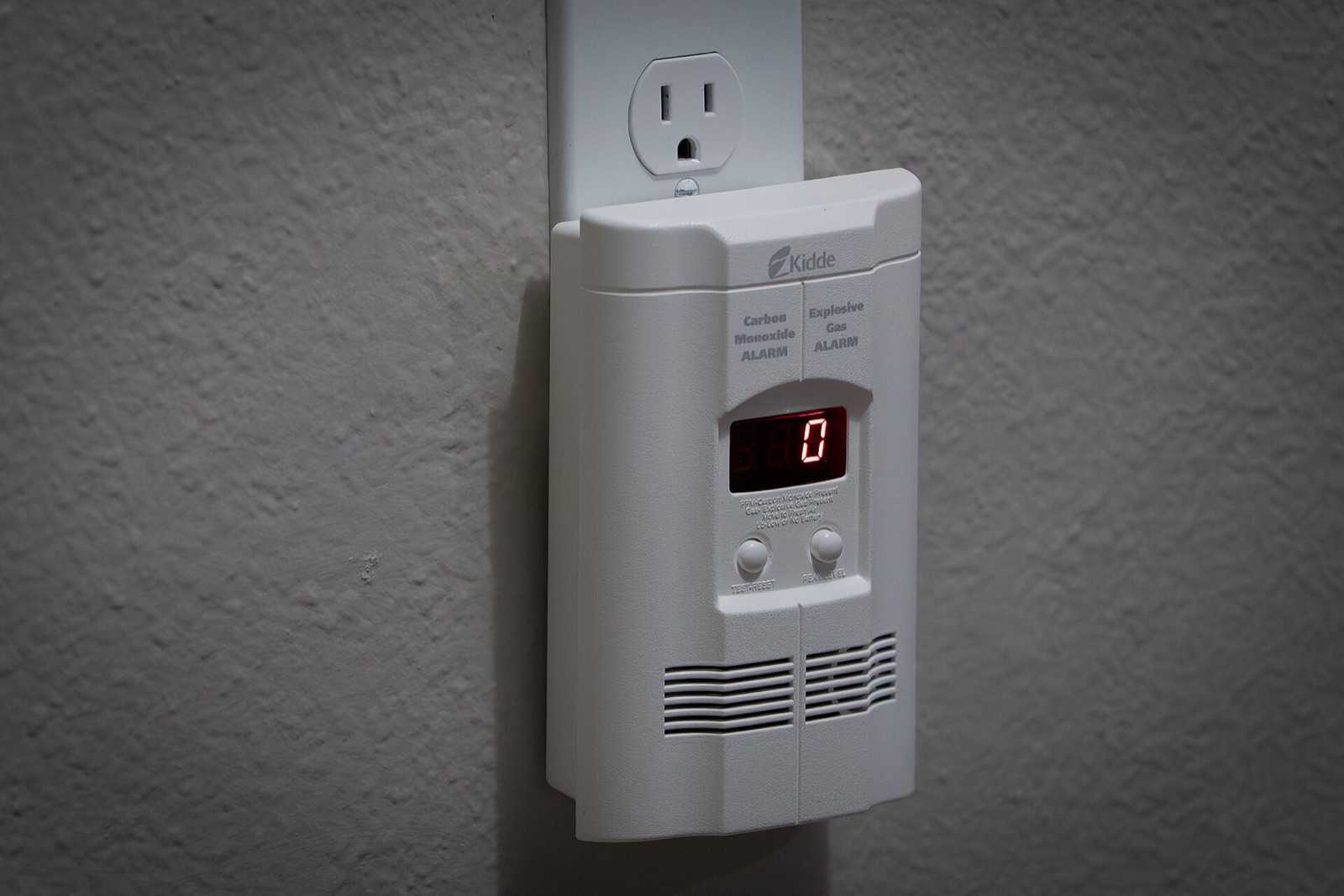
| Continuous loud alarm, red LED, unit mounted low near the floor | LP gas detector (Safe-T-Alert, MTI) | Propane or a contaminant at the sensor. Shut off tank, ventilate. |
| One chirp every 15 to 30 s, LED flashing, unit near the floor | LP gas detector | 12 V supply low (around 10 to 10.5 V) or end-of-life signal. |
| One chirp every 30 to 60 s from the ceiling | Smoke or CO alarm | Low 9 V battery, or end of life on a sealed unit. |
| Chirp that continues after a fresh battery | Smoke or CO alarm | End of life. Replace the alarm. |
| Tone from under a bed, a pass-through, or a remote panel | Inverter | Low DC input (typically 10.5 to 11 V), overload, or over-temperature. |
| Beep with a message on a touch pad near the door | Lippert Ground Control / Level-Up leveling | Low voltage, out of stroke, excess angle, jacks down. |
| Beeps from the dash with a tire position lit | TPMS monitor | Low or high pressure, high temperature, or sensor signal lost. |
| Beeps with a flashing error on the fridge panel | Dometic / Norcold absorption fridge | Fault code, or door left open. |
| Beeps from a 12 V compressor fridge | Dometic CFX, Norcold, Furrion, Everchill | Battery protection cutoff tripped, or error code. |
| Beeps from the dash monitor while towing | Backup camera monitor | Camera signal lost, or reverse beep. |
How the detectors decide to chirp
The three life-safety devices in a trailer (LP, CO, smoke) each have two voices: a full alarm pattern when they sense their gas, and a trouble chirp for everything else. The trouble chirp is what wakes people up.
The LP detector is hardwired to 12 V with no backup battery. Because it’s always on and always watching its supply, it’s usually the first device to notice a sagging battery. MTI’s Safe-T-Alert units (the 30-442 flush mount and 35-742 surface mount are the common ones) go into a low-voltage trouble mode when the supply drops to roughly 10 to 10.5 V; the LED changes and the unit chirps. The furnace blower pulling 8 A off a tired Group 24 at 3 a.m. is the classic trigger.
The same detectors have a built-in life timer. Safe-T-Alert propane detectors are rated for 5 years on older units and 7 years on some newer ones; the manufacture or replace-by date is on the label. When the timer runs out, the unit chirps and flashes on a schedule that won’t go away no matter what the battery does. The exact pattern is printed on the detector.
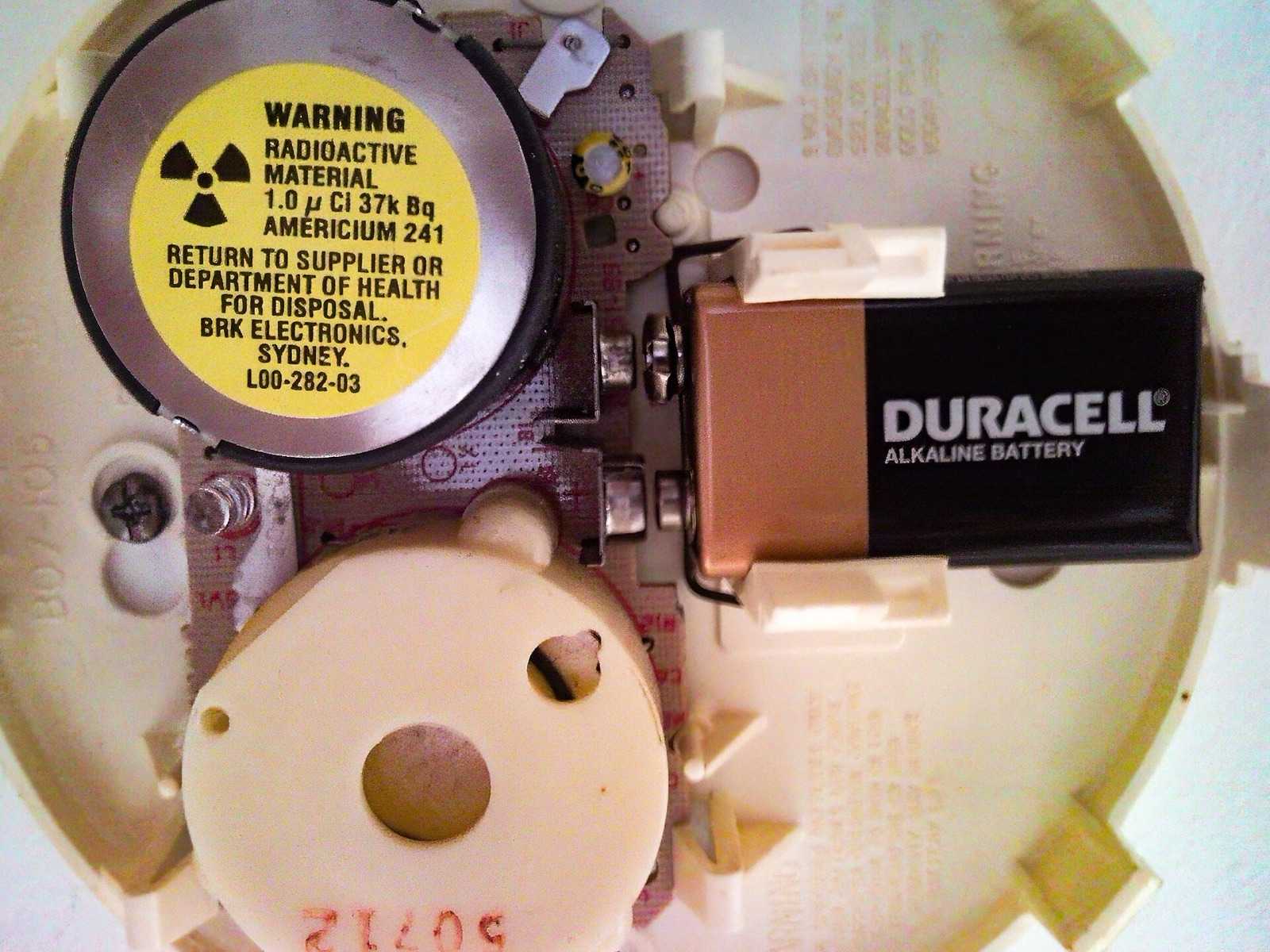
CO alarms under UL 2034 must signal end of life, typically at 7 years (some 10). Smoke alarms are a 10-year device. Both chirp for low battery (single chirp, 30 to 60 seconds apart) and at end of life with a different count or interval; the legend is on the back of the alarm.
Step 1Count the beeps and find the flashing light
Listen for two cycles and write down the count and interval. Then kill the interior lights and look for an LED flashing in time with the chirp; most devices do.
- Ceiling, with a 9 V drawer: smoke or CO alarm.
- Wall near the floor, hardwired, usually in the kitchen or bedroom: LP detector (or combination LP/CO on the 35-742).
- Under a bed, in a pass-through, or a remote panel by the entry: inverter.
- Panel by the door with buttons: leveling controller, or a OneControl or iN-Command panel.
If nothing visible is flashing and the sound seems to come from everywhere, it’s usually the LP detector, because it sits low and the sound bounces.
Step 2Read battery voltage before you touch any detector
Put a meter on the battery posts, or read the panel’s voltage display if it has one. Do this while the chirp is happening, with whatever loads are running.
- Below about 10.5 V: this is your answer. The LP detector is doing its job. Plug in, start the truck or generator, or turn off the furnace, and the chirp stops as voltage recovers. Then figure out why the battery got that low; a bank that drops to 10.5 V overnight is undersized, discharged, or not charging.
- 11 to 12 V at the battery but the chirp continues: pull the detector from the wall (two screws) and measure at its two wires. More than 0.5 V below the battery means a bad connection or an undersized run.
- 12.4 V or more and still chirping on a steady schedule: low voltage isn’t the cause. Go to step 3.
Step 3Check the date on the detector
Every LP, CO, and smoke alarm has a manufacture or replace-by date on the label. If it’s past, the chirp is the end-of-life signal and there’s no reset. Replace with the same type and mounting; the Safe-T-Alert 30-442 is a direct swap for most flush-mount LP detectors and wires to the same two leads.
Do not “fix” an end-of-life chirp by pulling the detector’s fuse or cutting its wires. The LP detector is the only thing in the rig that will tell you about a leak at the back of the stove while you sleep.
Step 4LP detector going off with no propane in use
A full alarm from the LP detector (loud, continuous, red LED) with the tank valves closed is almost always a contaminant. Known triggers from the MTI manual and common experience:
- Hairspray, deodorant, and other aerosols
- Cleaning chemicals, especially alcohol- and ammonia-based sprays
- Sunscreen and bug spray applied near the detector
- Off-gassing from new flooring, adhesives, and sealants in a new trailer
- Dog flatulence (a dog sleeping next to a floor-level sensor will set it off)
- Sewer gas from a dry P-trap or a tank with the roof vent blocked
- Hydrogen from a flooded battery charging hard in a compartment that vents into the living space
Treat every alarm as real first: open the door and windows, shut the tank valve, don’t flip switches, step outside. If it clears in a few minutes with ventilation and you can name an aerosol or cleaner used nearby, that’s your cause.
If it alarms again with propane on and nothing being sprayed, assume a leak. Shut the tank, soap-test the fittings you can reach, and get a manometer leak-down test from a tech if you can’t find it.
Step 5Smoke and CO alarms
A single chirp every 30 to 60 seconds from the ceiling is a low 9 V battery nine times out of ten. Change it, press test, done. Chirping that continues with a fresh battery is end of life; replace the alarm. A sealed 10-year smoke alarm gets replaced whole.
The CO alarm is either a 12 V hardwired unit (Dometic/Atwood 32701, Safe-T-Alert 65 series) or a 9 V battery unit. The hardwired ones can also chirp on low 12 V, so step 2 applies to them. The four-beep pattern means CO. Get everyone out and don’t go back in until the alarm has stopped and you’ve found the source: a generator exhaust (yours or a neighbor’s) drifting toward an open window, a furnace heat exchanger problem, or a portable propane heater used indoors.
Step 6Inverter alarms
Inverters beep for low input voltage, overload, and high temperature. The low-voltage warning on most consumer units (Go Power, Renogy, Xantrex PROwatt, and similar) sounds between 10.5 and 11 V and the unit shuts off around 10 to 10.5 V. If you hear it while the microwave or coffee maker is running, the battery is sagging under load. Smaller loads, a bigger bank, or a charged battery.
Overload is a steady tone that starts the moment you turn the load on. Over-temperature usually follows a long run under a bed with the vents blocked. Both clear when the condition clears. Inverter/chargers with a remote panel (Magnum, Xantrex Freedom, Victron) show the fault in text; read it before you reset.
Step 7Everything else that beeps
Leveling and slide controllers. Lippert Ground Control 3.0 and Level-Up touch pads beep with a message on fault: LOW VOLTAGE (the jacks want roughly 12 V or better), OUT OF STROKE, EXCESS ANGLE, or JACKS DOWN. Lippert Schwintek slide controllers don’t beep; they blink a fault code on the controller in the wall. Most leveling faults clear by retracting fully and starting over on better voltage.
Tire pressure monitors. TST, TireMinder, and EEZTire monitors alarm on low pressure (typically 15 to 20 percent below the baseline you set), high pressure (about 20 to 25 percent above), high temperature (around 158°F), and signal loss. A beep that clears a mile down the road is a baseline set too close to cold pressure; warm tires rise 10 to 15 percent. A sensor-lost alarm on one position is a dead sensor battery or a sensor out of range on a long trailer; a repeater fixes range.
Absorption refrigerators. Dometic and Norcold panels show a fault code and, on many models, beep with it. Common causes are no flame on gas (out of propane, air in the line, dirty burner), no 120 V when set to AC, or a door left ajar. The code list is model-specific; use the manual, not a forum thread.
12 V compressor fridges. Dometic CFX portables and the built-in 12 V fridges in newer trailers (Norcold, Furrion Arctic, Everchill) have a battery protection setting. On a Dometic CFX, Low cuts out around 10.1 V, Medium at 11.4 V, High at 11.8 V, and the fridge beeps or shows an error when it trips. High protects a start battery but trips early on a house bank that sags.
Backup camera monitors. Furrion Vision S and similar monitors beep when the camera signal is lost and, on some models, while reversing. Intermittent beeping on the highway is a camera losing power at the trailer end; check the connector in the marker-light housing.
Tank monitors, water heaters, furnaces, chargers. Standalone tank panels (SeeLevel, basic LED panels) don’t beep; integrated panels (Lippert OneControl, ASA iN-Command) can chime for a full tank or low battery. Suburban and Atwood/Dometic water heaters and furnaces have no beeper at all; faults show as an LED blink code on the board. Tankless water heaters (Girard, Truma, Furrion) have a control panel that can chirp with an error code. Converters and solar controllers are silent.
In the truck. Tekonsha and Redarc brake controllers beep and show a disconnect code when the trailer brake circuit drops out; check the 7-pin and the trailer junction box. Keypad door locks chirp on low AA batteries.
If you still can’t find it
Pull 12 V fuses one at a time and listen. When the beep stops, you’ve found the circuit. Put every fuse back as you go, including the LP detector’s; the goal is to identify, not to silence. If the chirp survives every fuse, it’s running on its own battery: a smoke or CO alarm, or something in a drawer.
Symptom → likely cause
| What you hear | Most likely | Check |
|---|---|---|
| Chirp at night, stops when plugged in | LP detector low-voltage warning | Battery voltage under furnace load |
| Chirp on a steady schedule, voltage fine | Detector end of life | Date on label; replace |
| Full LP alarm, propane off, cleaning just done | Contaminant on sensor | Ventilate, reset |
| Full LP alarm, propane on, nothing sprayed | Possible leak | Shut tank, soap test, tech |
| Four beeps repeating | CO | Leave, ventilate, find the source |
| Tone when the microwave starts | Inverter low voltage | Battery state, cable size |
| Dash beep while towing, tire position lit | TPMS | Pressure, baseline setting, sensor battery |
| Beep and code on fridge panel | Fridge fault | Code in manual; propane, 120 V, door |
Stop and call a certified RV technician if: the LP detector goes into full alarm with propane on and no aerosol or chemical to blame; you smell propane anywhere in or under the rig; the CO alarm sounds its four-beep pattern and you can't identify and remove the source; or anyone has a headache, dizziness, or nausea along with a CO alarm (leave the rig and call emergency services). Never disconnect, unplug, or remove an LP, CO, or smoke detector to stop a chirp. Replace it on schedule and fix the voltage problem it's reporting.
Parts and tools mentioned
- Digital multimeter
- Replacement LP detector (Safe-T-Alert 30-442 flush mount, 35-742 surface mount, or 20-441 mini; match your mounting)
- Replacement CO alarm (Dometic/Atwood 32701 12 V, Safe-T-Alert 65 series, or a UL 2034 battery unit)
- 9 V batteries for smoke and CO alarms, AA batteries for the door lock
- Soapy water in a spray bottle for leak-checking fittings
- TPMS repeater if a rear sensor on a long trailer keeps dropping signal
Questions people ask next
Why does the propane detector only beep at night? Because that’s when the battery is lowest and the furnace is pulling the most. The low-voltage warning trips around 10 to 10.5 V, and a lead-acid battery that read 12.4 V at dinner can sag that far under a blower load by 3 a.m. The fix is battery capacity or charging, not the detector.
Can I just unplug the propane detector until I replace it? No. Live with the chirp for the day or two it takes to get a replacement; they’re inexpensive and wire to the same two leads. A trailer with the LP detector unplugged has no warning for a leak at the stove, the furnace, or the fridge.
How do I know if the beep is the CO alarm or the smoke alarm? Count. Four beeps then a pause is CO. Three beeps then a pause is smoke. A single chirp with a long gap is a low battery or end of life on either one, and the flashing LED tells you which unit.
My LP detector alarms every time I clean the floor. Is it broken? Probably not. Alcohol- and ammonia-based cleaners set off the sensor. Open the windows before you clean, keep the spray away from the detector, and let it clear. If it alarms with nothing sprayed and propane on, treat it as a leak.
Photos

Manuals and references consulted
- MTI Industries Safe-T-Alert 30 Series and 35 Series LP gas alarm owner's manuals
- UL 2034 (CO alarms) and UL 217 (smoke alarms) temporal alarm pattern definitions
- Dometic/Atwood 32701 and Safe-T-Alert 65 Series CO alarm manuals
- Lippert Ground Control 3.0 and Level-Up owner's manuals (touch pad messages)
- Dometic CFX series owner's manual (battery protection settings)
- TST 507 and TireMinder TPMS owner's manuals (alarm thresholds)