How to Winterize a Travel Trailer
Blow-Out Method and Antifreeze Method, With Quantities
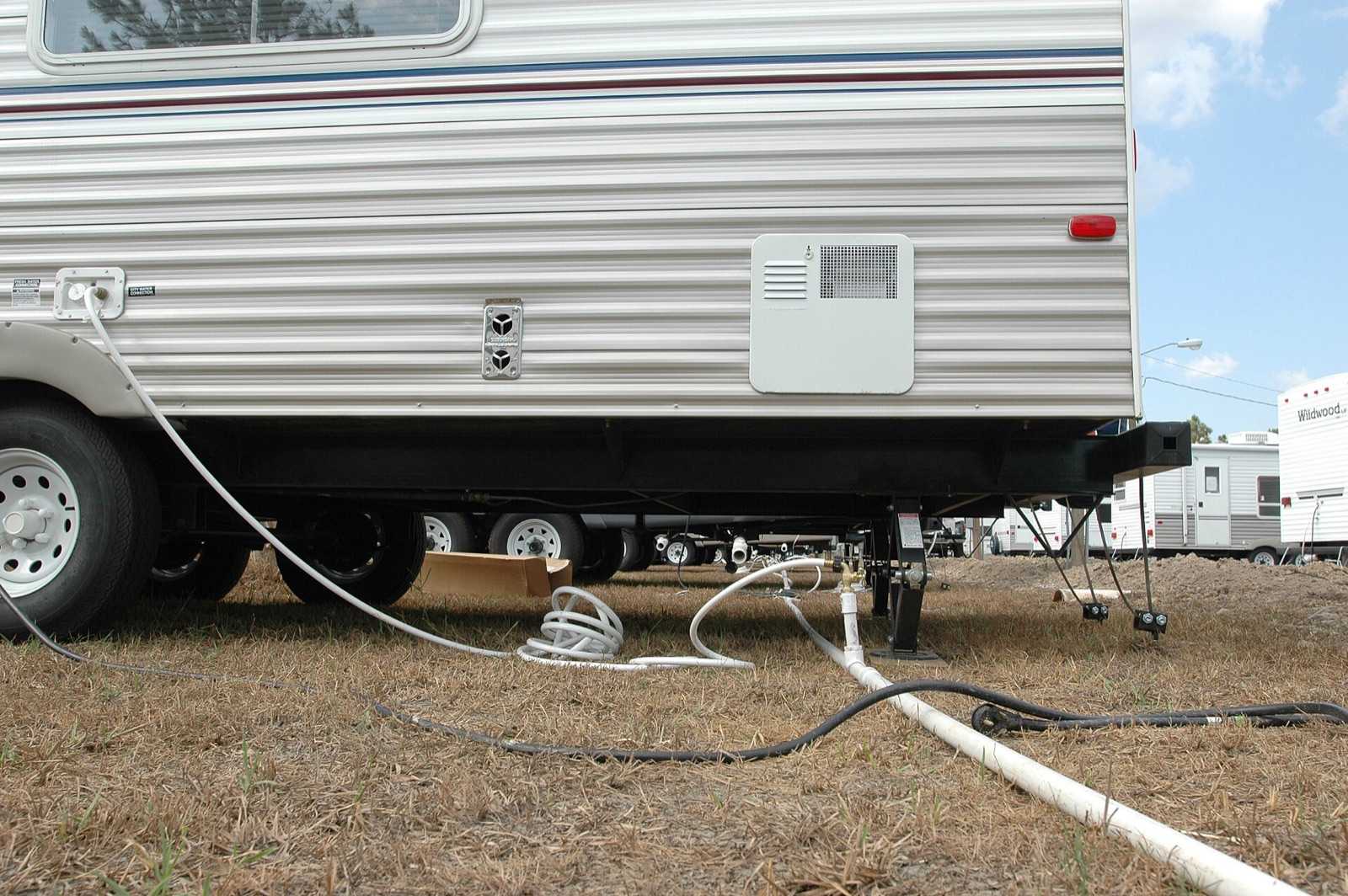

Winterizing order
- Heater off, fresh tank drained Hot tank, wait
- Relieve pressure, drain heater Suburban anode 1-1/16 in Seized anode, scald
- Low points, faucets open Pump 10-15 s, then close Left open, pink lost
- Set heater bypass Cold closed, bypass open Tank swallows 6 gal
- Blow out every fixture 30-40 psi, never 50 Shop air splits valves
- Pump antifreeze through -50°F, solid pink 5-10 s Hand pump misses pump head
- Dose traps, inlets, toilet 1 cup per P-trap Fresh tank stays dry
- Battery, propane, vents, mice Discharged battery freezes
Winterizing antifreeze calculator
Your fixtures, and whether you blow the lines out first; get the gallons to buy and the bleach to sanitize.
Open the calculator →Watch it done
Videos are from the channels named, not Chock & Level. Where a video and your manual disagree, follow the manual. Playing a video loads YouTube, which sets its own cookies.
PEX lines tolerate a freeze better than copper, but the fittings, the pump head, the toilet valve, the outdoor shower, and the water heater tank do not. A hard freeze with water left in the system typically costs a pump housing, a toilet valve, or a water heater tank, and the expensive part is the floor it leaks onto in April.
Winterizing is draining what you can, then getting the rest out with air or displacing it with RV antifreeze. Most people do both: blow out first so less antifreeze is needed and what’s left is undiluted, then pump pink through. Air alone leaves water in the pump head, low spots, and check valves, so in hard-freeze country it’s a first pass, not the whole job.
Allow 2 to 3 hours plus the water heater cool-down. The order matters: the heater has to be cool, drained, and bypassed before antifreeze goes near the pump.
Quick answer. Turn off the water heater (gas and electric) and let it cool. Drain the fresh tank, then the water heater (Suburban: pull the anode with a 1-1/16 in socket; Atwood: pull the nylon plug) after relieving pressure. Open the low-point drains and all faucets, then close them. Set the water heater bypass. Blow out every fixture, hot and cold, at 30 to 40 psi. Then pump 2 to 3 gal of -50 °F RV antifreeze through the pump winterizing valve until every fixture, the toilet, and the outdoor shower run solid pink. Pour a cup into each P-trap. Push the city water inlet check valve. Do not put antifreeze in the fresh tank.
How the water system is laid out
Water enters through the city inlet (hose pressure, through a check valve) or the pump, which draws from the fresh tank. Both feed a cold manifold that runs to every fixture and to the water heater’s cold inlet; the heater’s hot outlet feeds the hot side of every fixture. Low-point drains, one hot and one cold, hang off the lowest point of each run.
The water heater is the trap in this layout. It holds 6 or 10 gal in the middle of the hot side, so antifreeze pumped with the heater in the circuit fills the tank before any reaches a faucet. Hence the bypass valves.
Step 1Shut down and drain the fresh tank
Turn off the water heater at its switch, the electric element switch, and the 120 V breaker, and close the propane cylinder valves. If the heater was recently on, wait; 6 to 10 gal at up to 140 °F takes hours to cool.
Open the fresh tank drain, usually a petcock or a capped pipe under the belly near the tank. Leave it open.
Step 2Drain the water heater after relieving pressure
With the pump off and city water disconnected, open a hot faucet inside, then lift the lever on the pressure-and-temperature relief valve behind the water heater’s exterior door until it stops hissing. If the drain fitting is warm, wait longer.
Suburban (SW6DE, SW10DE, and similar). The drain is the anode rod, a 3/4 in NPT plug with a magnesium rod attached, at the lower left of the tank. It takes a 1-1/16 in socket. Back it out and step aside; 6 gal comes out fast. Replace the rod if it is more than about half eaten away (Suburban 232767). Flush the tank until the water runs clear. Leave the anode out over winter, taped inside the door, and reinstall it in spring with a few wraps of Teflon tape.
Atwood and Dometic (GC6AA, GC10A, and similar). No anode; the tank is aluminum. The drain is a 1/2 in NPT nylon plug at the lower left (Atwood 91857). Don’t overtighten on reinstall; the plug is plastic so it strips before the tank threads do. Flush the same way.
Step 3Open the low-point drains and every faucet
Find the two low-point drain lines under the trailer, typically red (hot) and blue (cold) PEX with caps or petcocks. Open both, then open every faucet hot and cold, the shower, and the outdoor shower, and hold the toilet flush until it stops. Run the pump 10 to 15 seconds to push water toward the drains, then turn it off.
When the drains stop, close the low-point drains and the faucets. If you leave the low points open, the antifreeze in step 7 runs straight out onto the ground.
Step 4Set the water heater bypass
Bypass kits come in three styles. The goal is the same: cold water (or antifreeze) that would have gone into the tank goes directly to the hot line, and the tank is sealed off.
- Three-valve. Valves on the cold inlet, the hot outlet, and the bypass line. Winter: cold closed, hot closed, bypass open.
- Two-valve. Valves on the cold inlet and the bypass; a check valve on the hot outlet. Winter: cold closed, bypass open.
- Single-valve. One valve body on the cold inlet that shuts the inlet and opens the bypass in one turn. Winter: handle to BYPASS per the kit’s label.
If the trailer has no bypass, add one (Camco and Valterra sell three-valve kits) before you pour antifreeze. Without it a 6 gal heater swallows 6 gal of antifreeze and a 10 gal heater 10 gal, all of which has to be flushed out in spring.
Write the valve positions on tape near the valves. The most common spring problem traced to winterizing is a bypass left set: the faucets flow and the water heater is empty. Light it on gas and the ECO trips within minutes; switch on the electric element and it burns out dry in seconds. If you’re reading this in April with a heater that won’t stay lit, see water heater won’t light on gas.
Step 5Blow out the lines at 30 to 40 psi
Thread a blow-out plug (a 3/4 in hose-thread cap with a tire-valve stem) into the city water inlet. Set the compressor’s regulator to 30 to 40 psi and never above 50. RV plumbing is factory tested in the 40 to 50 psi range; unregulated shop air at 90 to 125 psi will find the toilet valve.
Open fixtures one at a time, farthest from the inlet first, hot then cold, until only mist comes out, usually 30 to 60 seconds:
- Kitchen faucet, hot then cold.
- Bathroom lavatory, hot then cold.
- Shower. Remove the head and blow through the hose too; a hose full of water splits.
- Toilet. Hold the flush pedal until it runs dry. Cold only.
- Outdoor shower. Both valves, with the head’s trigger held open; leave the head hanging down.
- Washer hookups, if present. Both bibs, into a bucket.
- Ice maker line, if present. Shut the supply valve, disconnect the line at the fridge, and blow it out. Refrigerator makers generally say air only through the ice maker solenoid, no antifreeze; leave it disconnected.
- Water filter housing. Unscrew it, discard the cartridge, and reinstall the housing empty.
- Low-point drains. Open once more with air on, then close.
Go around a second time; water settles back into low spots. The pump head still holds water afterward, because its internal check valve blocks air from the city inlet, which is why antifreeze through the pump comes next.
Step 6Choose the antifreeze and how much
Use RV/marine antifreeze: propylene glycol, pink, labeled for potable water systems, with a -50 °F burst protection rating. On the label, -50 °F is burst protection; freeze protection (where it starts to slush) is typically listed around +12 °F. Slush does no harm. Dilution with leftover water raises both numbers, which is the argument for blowing out first.
Never use automotive antifreeze (ethylene glycol); it’s toxic.
How much, with the water heater bypassed:
| Trailer | Typical antifreeze |
|---|---|
| Small trailer, one bath, no outdoor kitchen, no washer | 2 to 3 gal |
| 25 to 30 ft with outdoor shower and long runs | 3 to 4 gal |
| Bunkhouse or two-bath, outdoor kitchen, washer hookups | 4 to 6 gal |
| Any trailer, water heater not bypassed | add 6 or 10 gal |
These are typical figures; the winterizing antifreeze calculator estimates from your fixture count and line length. Buy one more gallon than you think you need.
Step 7Pump antifreeze through the system
- Pump winterizing valve. Many trailers have a tee with a three-way valve on the pump’s suction side and a short hose. Turn the valve to the hose, put the hose in the jug, run the pump. If you don’t have one, a kit (Camco Pump Converter Kit or the Valterra equivalent) installs in 20 minutes.
- Hand pump through the city inlet. A hand pump with a hose-thread fitting pushes antifreeze from the jug into the city water inlet. No modification needed, but it can’t reach the pump head; finish by pouring a cup into the pump strainer and running the pump briefly.
With the heater bypassed and the low-point drains closed, hose in the jug, turn the pump on. It primes in 10 to 20 seconds and shuts off when the lines pressurize. Go through the same fixture sequence as the blow-out, farthest first, hot then cold, and run each until it flows solid pink for 5 to 10 seconds with no clear streaks, including the toilet, outdoor shower, washer bibs, and shower hose.
When every fixture runs pink, turn the pump off and return the winterizing valve to normal, or leave a note; a forgotten valve means a pump sucking air in May.
Step 8The places antifreeze doesn’t reach on its own
City water inlet check valve. It holds water on the inside. Push the center stem in with a small screwdriver until antifreeze dribbles out.
Black tank flush inlet. The check valve behind it cracks easily. Blow it out, then pour a half cup of antifreeze in.
P-traps. Pour about a cup (8 oz) into each sink drain and the shower drain. Nothing else displaces the water in a trap.
Toilet. Leave an inch or two of antifreeze in the bowl so the blade seal stays wet and the toilet still holds water next season.
Fresh tank. Do not put antifreeze in the fresh tank unless your manual says to. A drained tank with a cup of water in the bottom won’t split, and antifreeze in the tank takes several fill-and-drain cycles to rinse out and is the main way people end up with pink water in July.
Gray and black tanks. Dump both, rinse the black tank, close both gate valves, and cap the outlet. Pour a quart of antifreeze down a sink and a quart down the toilet so a little sits over each valve blade.
Step 9Batteries, propane, and the rest of the rig
Batteries. A flooded lead-acid battery’s freezing point depends on state of charge, because a discharged battery’s electrolyte is mostly water. Approximate figures from published lead-acid tables:
| State of charge | Approx. freezing point |
|---|---|
| 100 percent | about -70 °F or lower |
| 75 percent | about -35 °F |
| 50 percent | about -10 °F |
| 25 percent | about +5 °F |
| Discharged | about +20 °F |
A frozen battery is a cracked case. Either remove it and store it indoors on a maintainer, or leave it installed, fully charged, with the negative cable pulled so the propane detector and stereo memory don’t drain it, and check it monthly. Lithium (LiFePO4) batteries don’t freeze the same way, but most BMS units block charging below about 32 °F; store them around 50 to 60 percent and disconnected.
Propane. Cylinder valves closed. Cylinders stay on the trailer or outdoors, never indoors.
Vents. Cover roof vents and screen the furnace, water heater, and fridge exterior vents against mud daubers.
Mice. They enter where plumbing and wiring pass through the floor. Stuff gaps with stainless or copper mesh (not steel wool, which rusts), remove all food, and set traps. Peppermint and dryer sheets are unproven, and poison inside means a mouse dying in a wall.
Tires. Inflate to the sidewall maximum, cold, and cover them from UV. Chock the wheels.
Covers and interior. Use a breathable RV cover, not a tarp, which traps moisture and sands the roof. Prop the fridge door open, open the cabinets under sinks, and set out a moisture absorber.
Printable checklist
- Water heater off (gas, electric switch, 120 V breaker); propane valves closed
- Fresh tank drained, drain left open
- Water heater cooled, pressure relieved, drained (Suburban anode / Atwood plug), flushed
- Low-point drains and faucets opened, pump run 10-15 s, then all closed
- Water heater bypass set (cold closed, hot closed, bypass open); positions labeled
- Blow-out at 30-40 psi, every fixture hot and cold, shower hose, toilet, outdoor shower, washer bibs, ice maker line, filter housing emptied
- Antifreeze pumped: every fixture solid pink 5-10 s, toilet, outdoor shower, washer bibs
- City inlet check valve pushed until pink; tank flush inlet dosed
- One cup antifreeze in each P-trap; antifreeze left in toilet bowl; none in fresh tank
- Gray and black tanks dumped, valves closed, a quart of antifreeze in each
- Pump winterizing valve returned to normal (or note left)
- Battery removed to indoor maintainer, or charged and disconnected; check monthly
- Vent covers on; furnace, water heater, and fridge vent screens checked
- Mesh in floor penetrations, food out, traps set
- Tires at sidewall max, covered, chocked; breathable cover; fridge door propped
- Note taped at the pump switch: “WINTERIZED - heater bypassed, pump valve set”
Symptom → likely cause
| What you see | Most likely | Check |
|---|---|---|
| Antifreeze never reaches a faucet, pump runs and runs | Heater not bypassed (filling the tank) or a low-point drain open | Bypass valves; look under the trailer |
| Pump runs but draws no antifreeze | Hose not submerged, valve not turned, air leak at the hose | Hose, valve position, clamp |
| Pink at cold, clear at hot | Hot side still routed through the tank | Hot outlet valve closed, bypass open |
| Spring: water heater lights, shuts down, ECO tripped | Bypass still set, tank dry | Return bypass to normal, fill, then light |
Stop if: the water heater drain or P&T valve is hot to the touch or the water is steaming; 6 gal at 140 °F on your forearm is a trip to the ER. Stop if you can't get the compressor regulated below 50 psi. Stop and call a tech if the P&T relief valve won't reseat and keeps dripping, if the anode or plug is seized and the fitting starts to turn with it (that fitting is the tank), or if you find a wet floor or soft spot around the water heater before you start. The propane cylinders stay closed for all of this.
Parts and tools mentioned
- 1-1/16 in socket (Suburban anode rod); wrench for the Atwood 1/2 in NPT nylon drain plug (Atwood 91857)
- Water heater bypass kit, three-valve (Camco or Valterra), if not already installed
- Blow-out plug for the city water inlet; air compressor with regulator and gauge
- RV/marine antifreeze, propylene glycol, -50 °F burst rating, 2 to 6 gal
- Pump winterizing valve kit or hand pump kit
- Winterizing antifreeze calculator
Questions people ask next
Can I skip the antifreeze and just blow out the lines? Where freezes are light and brief, with antifreeze poured into the pump strainer, P-traps, and toilet, people do. Where freezes are hard, water left in the pump head, toilet valve, and check valves is the usual casualty, and antifreeze is cheap next to a Shurflo 4008.
How do I de-winterize? Return the bypass valves to normal, reinstall the anode or plug with Teflon tape, close the low-point drains, fill the fresh tank, run every fixture until the pink is gone, and fill the water heater (steady flow from a hot faucet) before turning it on. Sanitize with a quarter cup of household bleach per 15 gal of tank, let it sit a few hours, drain, refill.
Do I need antifreeze in the water heater if I didn’t bypass it? If the tank is drained with the plug out, it’s empty and needs nothing. The bypass keeps antifreeze out of the tank; it was never about getting it in.
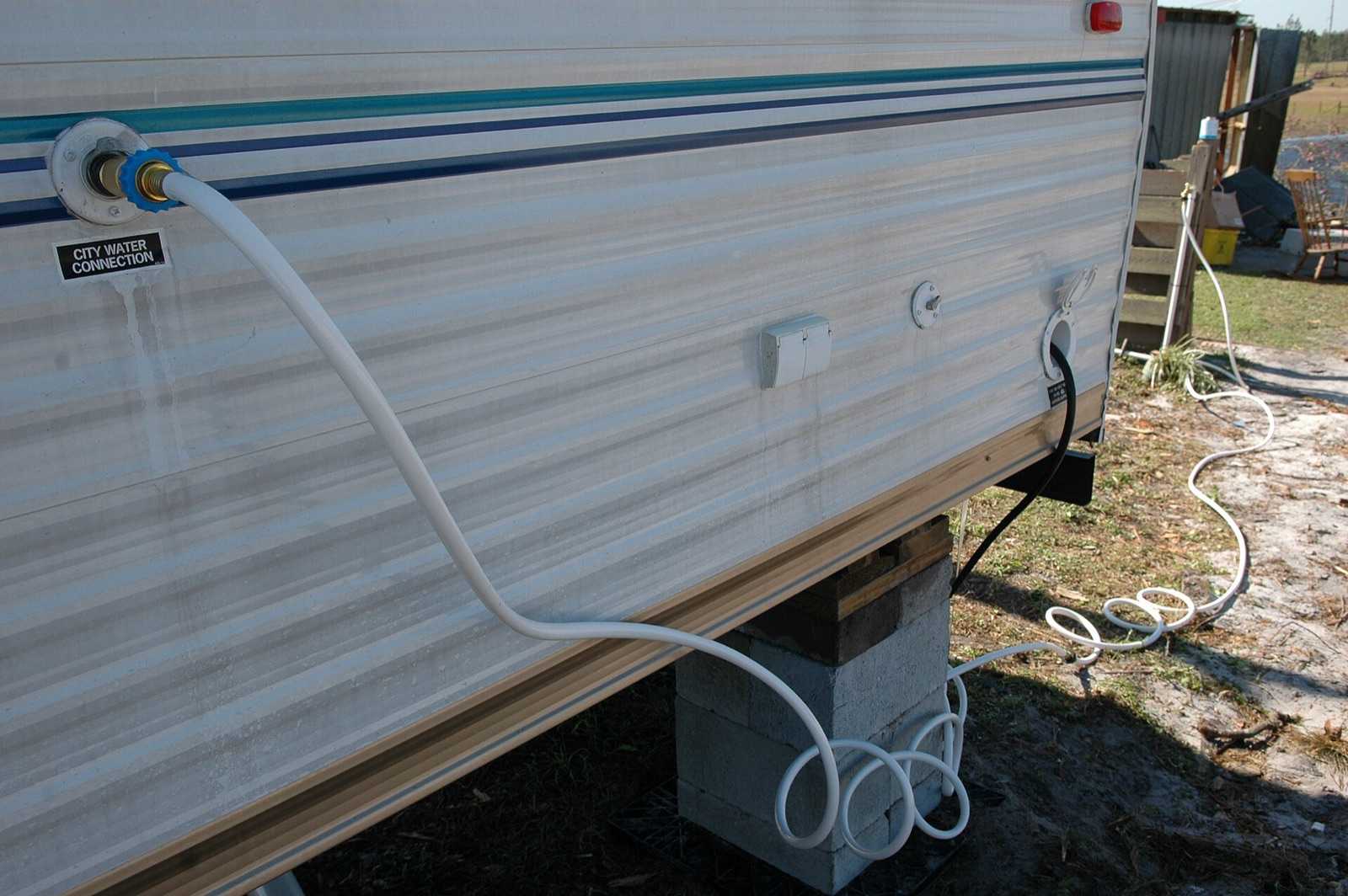
Photos

Manuals and references consulted
- Suburban SW-Series water heater owner's manual (draining and anode rod)
- Atwood/Dometic GC6AA and GC10A water heater service manual (drain plug and bypass)
- Shurflo 4008 pump installation guide (winterizing section)
- Camco RV antifreeze and pump converter kit labels
- Battery Council International freezing point vs. specific gravity table for flooded lead-acid
- Dometic 310/320 and Thetford Aqua-Magic toilet manuals (winterizing section)